

Effects of Acoustic Deterrent Devices on Fish CPUE and Catch Dominance in the Guyana Driftnet Fleet
The first pinger experiment in Guyana's coastal driftnet fishery
This report presents the results of the first completed pinger experiment in Guyana's coastal driftnet fishery, conducted as part of the country's response to the U.S. Marine Mammal Protection Act (MMPA) Import Provisions and the comparability finding process. The experiment evaluated whether acoustic deterrent devices alter catch rates of target finfish or interfere with normal driftnet operation — a necessary baseline assessment prior to the launch of a broader national pilot programme focused on marine mammal bycatch reduction.
Regulatory Background
Under the MMPA Import Provisions, harvesting nations must demonstrate to the United States that they maintain a regulatory programme to address the intentional and incidental mortality and serious injury of marine mammals in their fisheries — and that this programme is comparable in effectiveness to the U.S. regulatory programme. Without a positive comparability finding, nations risk losing access to the U.S. market for fish and fish products.
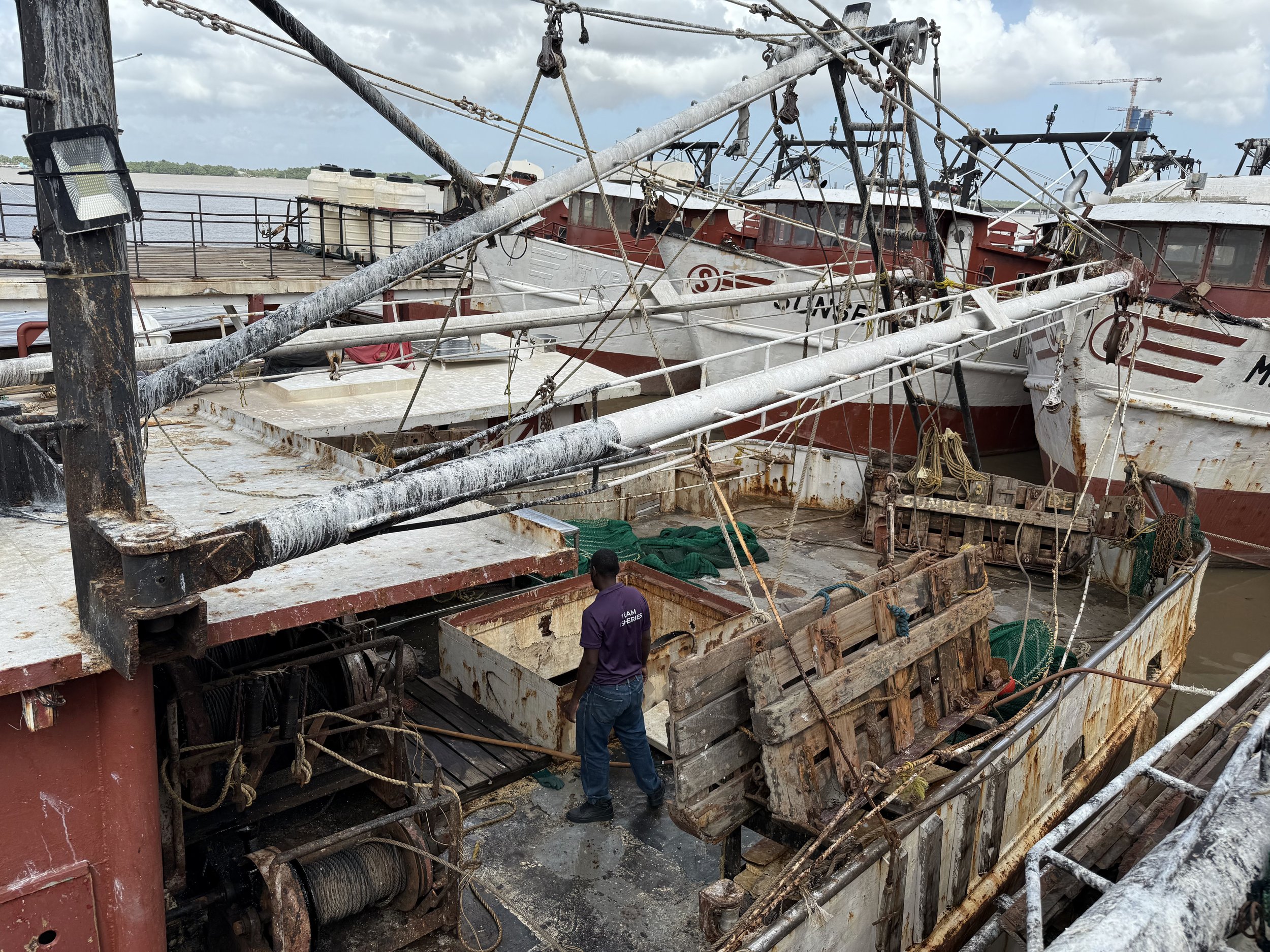
Guyana's driftnet fleet operates in coastal waters where interactions with cetaceans and other protected species are known to occur. As a practical first step toward compliance, the Fisheries Department has begun trialling acoustic deterrent devices — commonly known as pingers — devices that emit broadband acoustic signals designed to warn marine mammals away from gear. Before deploying these devices at scale, it was necessary to establish that they do not compromise catch efficiency or alter normal gear behaviour under commercial conditions. This report presents the findings of that first experiment.
Study design and experimental methods
Vessel deployment and net configuration
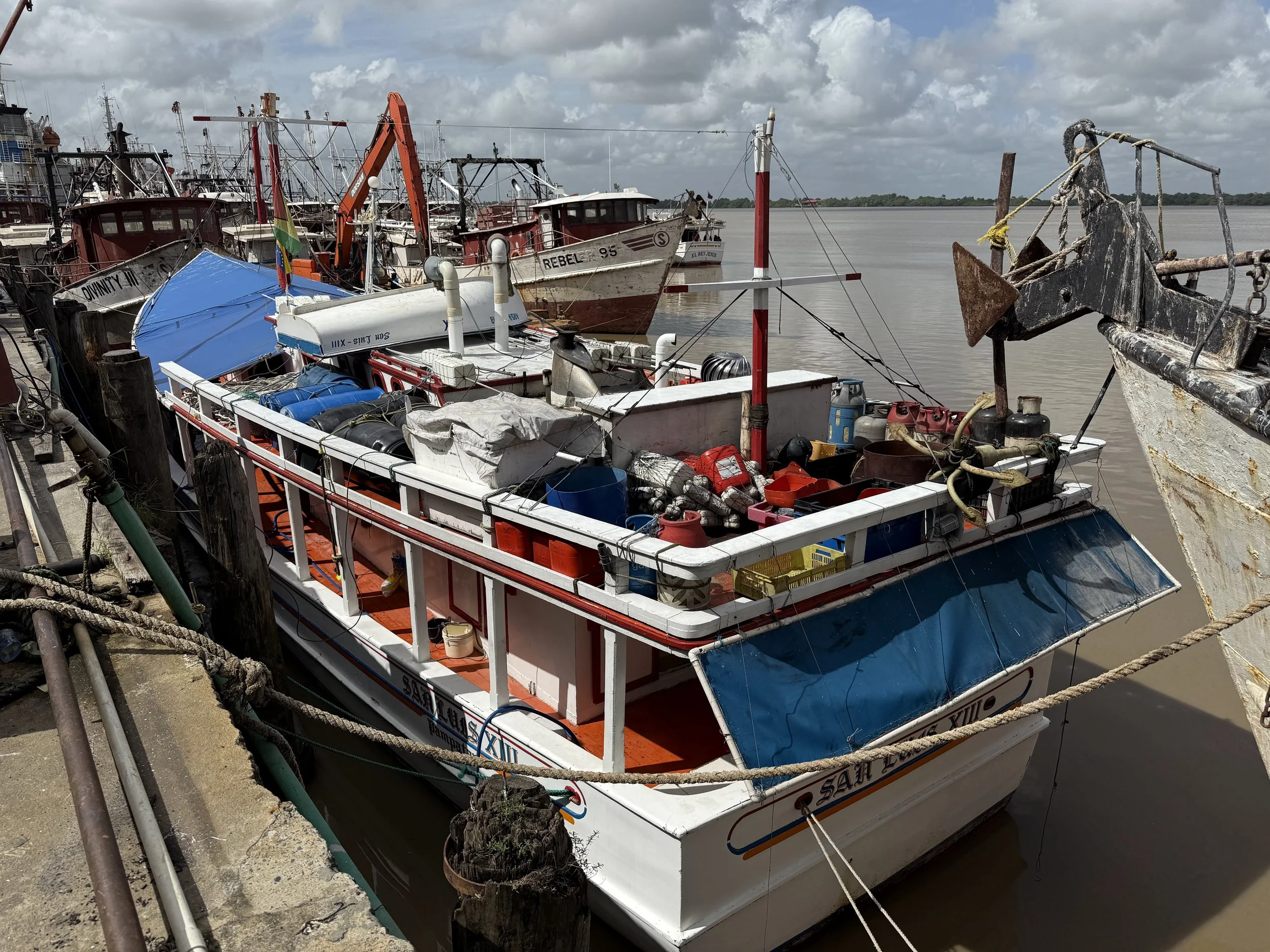
Two commercial vessels deployed driftnet strings under standard commercial operating conditions along the central and northeastern Guyana continental shelf. A conventional driftnet without pingers (Control) and a pinger-equipped driftnet (Test) were deployed independently, providing unpaired but comparable observations across 26 valid sets — 13 Control and 13 Test — after three initial sets were excluded due to storm conditions and gear entanglement.
Total catch weight was recorded for each deployment alongside soak time, and all values were standardised to pounds per 12 hours (lb/12 hr) to allow comparison across sets with differing durations.
Statistical framework and bootstrap rationale
Rather than a conventional t-test, the analysis used a non-parametric bootstrap framework — drawing 10,000 resamples from the Control and Test CPUE data independently. This approach was chosen for two reasons: the nets were not deployed simultaneously in matched locations, making paired-sample tests inappropriate; and exploratory diagnostics revealed moderate skewness and unequal variance in the CPUE values, which violates the assumptions of parametric tests.
The bootstrap p-value represents the proportion of simulated replicates in which the mean difference equaled or exceeded the observed difference. All analyses were conducted in R version 4.5.1.
Multispecies catch dominance analysis
Beyond total catch weight, the study examined whether pinger use shifted the multispecies structure of the catch — that is, whether the relative contribution of dominant and rare species changed between treatments. Cumulative dominance curves were constructed for each treatment following the framework of Clarke (1990) and Herrmann et al. (2022), with haul-level bootstrapped confidence intervals (10,000 iterations).
The STM DDD 03L Acoustic Deterrent Device
The device selected for the experiment was the STM DDD 03L, part of the commercial DDD 03X STM series. A 10 cm float was attached to each unit to maintain proper net buoyancy during deployment. The device is engineered specifically to disrupt dolphin echolocation — not to affect fish hearing — making it acoustically targeted at marine mammals while leaving the sensory systems of finfish largely unaffected.
A key design feature is the randomised modulation of the acoustic signal — varying frequency, intensity, and pulse duration — to prevent cetaceans from habituating to a predictable sound pattern, a known failure mode in earlier pinger generations.
Results
Catch efficiency — no detectable effect of pinger use
Mean CPUE was 120.5 lb/12 hr for Control sets and 113.4 lb/12 hr for Test sets. The 95% confidence intervals overlapped substantially, and the bootstrap mean difference of 7.1 lb/12 hr carried a wide CI spanning −32.5 to +46.2 lb/12 hr — encompassing zero and showing no consistent directional shift. The empirical p-value of 0.742 confirms that the null hypothesis of equal mean CPUE cannot be rejected.
Kernel density estimates and violin plots both confirmed that the distributions for Control and Test were unimodal, similar in shape, and extensively overlapping — indicating that CPUE variation is driven primarily by environmental and operational factors, not by pinger presence.
Fishers reported no changes in net buoyancy, handling, or gear behaviour associated with pinger deployment, consistent with the device's acoustic design.
Catch community structure was unaltered by pinger deployment
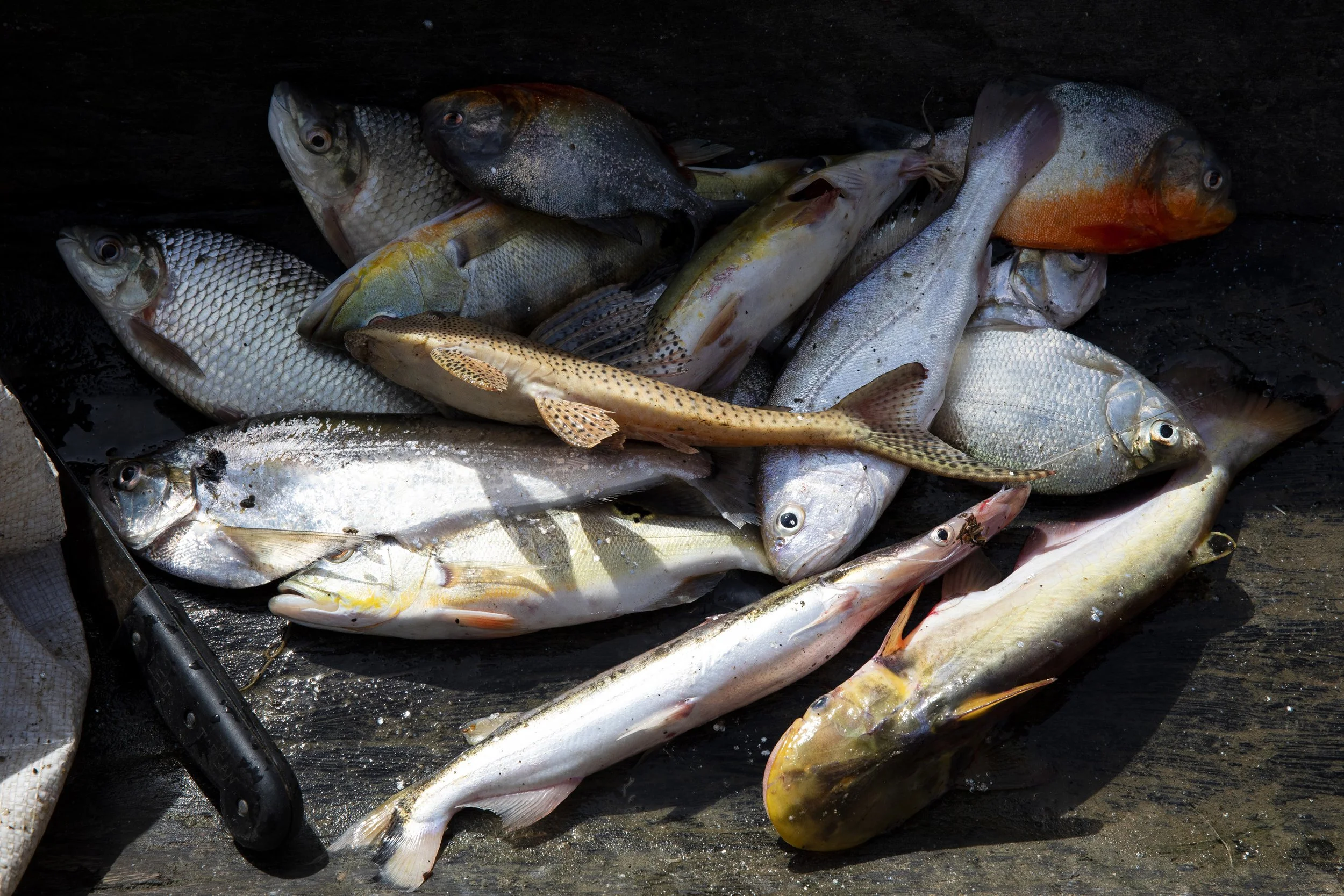
Across all valid sets, the fishery retained 14 taxa from eight families and six orders, dominated by commercial sciaenids and scombrids, with elasmobranchs at lower relative abundance. The same assemblage was present in both treatments.
Cumulative dominance curves for Control and Test followed nearly identical trajectories. The first five species contributed approximately 85–86% of total abundance in both treatments, and bootstrapped confidence bands overlapped at every species rank — indicating the dominance structure is statistically indistinguishable between treatments. No protected marine mammal or sea turtle was recorded during the trials.
Species recorded across control and test treatments
| Common name | Scientific name | Family | Order |
|---|---|---|---|
| Grey Snapper | Cynoscion acoupa | Sciaenidae | Acanthuriformes |
| Sea Trout | Cynoscion virescens | Sciaenidae | Acanthuriformes |
| Cuffum | Megalops atlanticus | Megalopidae | Elopiformes |
| King Fish | Scomberomorus cavalla | Scombridae | Scombriformes |
| Mackerel | Scomberomorus brasiliensis | Scombridae | Scombriformes |
| Snook | Centropomus spp. | Centropomidae | Carangiformes |
| Blacktip Shark | Carcharhinus limbatus | Carcharhinidae | Carcharhiniformes |
| Hammerhead Shark | Sphyrna spp. | Sphyrnidae | Carcharhiniformes |
| Water Belly Shark | Rhizoprionodon spp. | Carcharhinidae | Carcharhiniformes |
| Tiger Shark | Galeocerdo cuvier | Galeocerdonidae | Carcharhiniformes |
| Long Nose (stingray) | Hypanus guttatus | Dasyatidae | Myliobatiformes |
| Cow Nose | Rhinoptera bonasus | Rhinopteridae | Myliobatiformes |
| Sharp Nose (ray) | Fontitrygon geijskesi | Dasyatidae | Myliobatiformes |
| Yontail (manta) | Mobula birostris | Mobulidae | Myliobatiformes |
Several taxa belong to orders regulated under Guyana's Marine Mammal Protection Regulations 2022 — specifically Carcharhiniformes and Myliobatiformes. No ETP species were landed during the sea trials.
Interpretation
The absence of a detectable effect on target CPUE is an affirmative outcome. It suggests that pingers can be introduced into the driftnet fleet to reduce marine mammal bycatch without compromising catch efficiency — directly addressing one of the main practical barriers to adoption: fisher concern that devices will reduce catches or interfere with gear.
The stable dominance structure carries two additional implications. First, pinger deployment did not shift the catch toward a less commercially valuable species composition. Second, the proportional contribution of elasmobranchs was unaffected, suggesting the acoustic signal neither attracted nor repelled sharks and rays — a finding of direct relevance given ongoing conservation concerns around elasmobranch bycatch in the CLME+ region.
The wide confidence interval on the mean difference (−32.5 to +46.2 lb/12 hr) reflects the natural variability of coastal driftnet fisheries. These results are best interpreted as providing no evidence of harm to catch efficiency, rather than a precise estimate of pinger effect size. Larger sample sizes from the forthcoming pilot will progressively narrow this uncertainty.
A key limitation is that no marine mammals were encountered during the sea trials, so the primary conservation objective — bycatch reduction — could not be directly evaluated. This remains the central unanswered question.
Next Steps
These findings establish the baseline for Guyana's upcoming one-year national pilot programme, which will integrate onboard observers and electronic monitoring to quantify marine mammal interactions under commercial fishing conditions, while continuing to track effects on catch performance.
Future priorities include increased sample sizes, direct documentation of cetacean and ETP species interactions, and where possible paired deployment designs to improve statistical resolution of any treatment effects.
From an MMPA comparability perspective, this experiment provides evidence that bycatch mitigation can be adopted without undermining the economic viability of the fishery — an important criterion for sustained, fleet-level implementation.
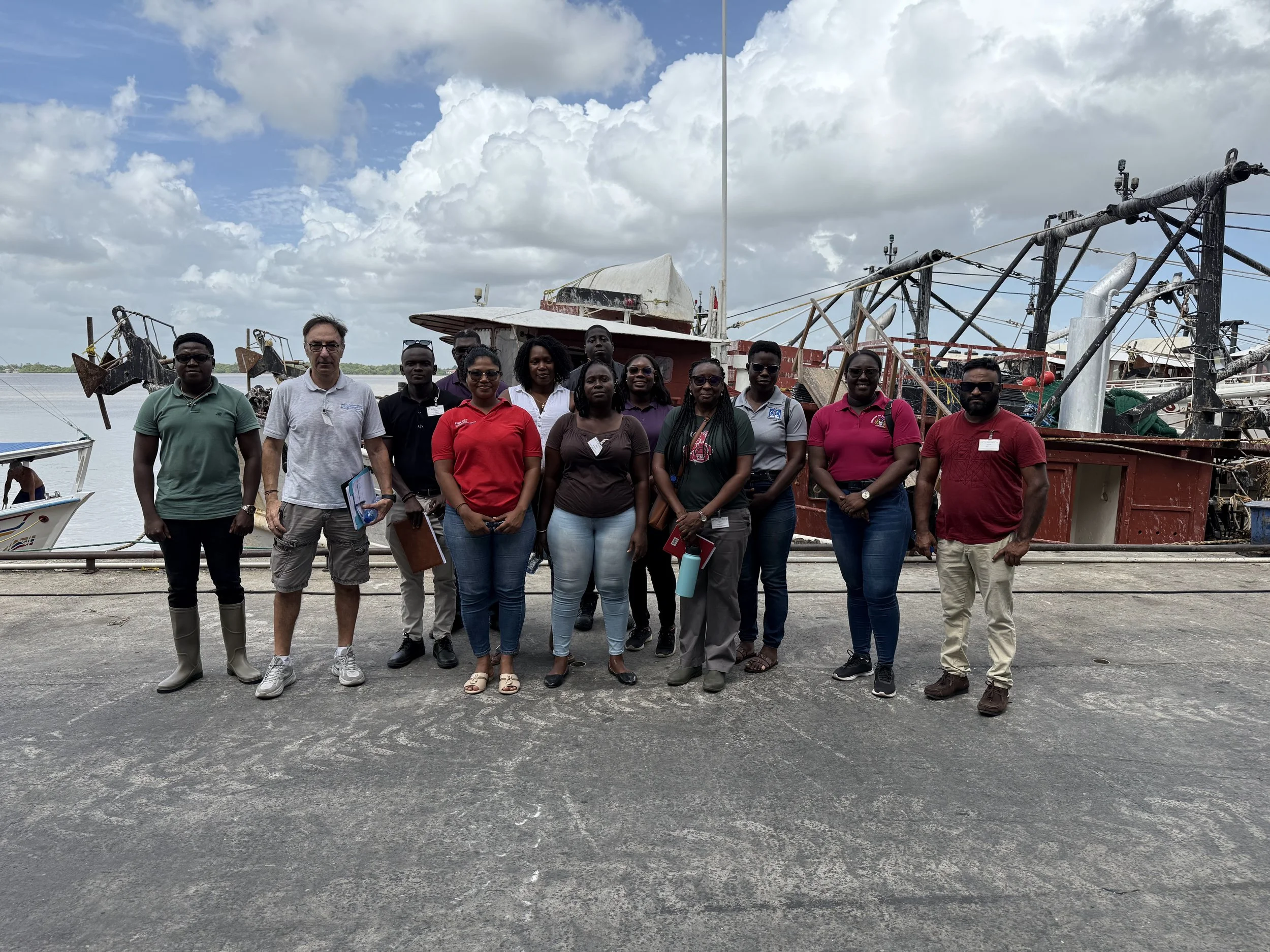
Meet the REBYC-III CLME+ Guyana Team